How Water Damage Can Turn Into Mold Faster Than You Think in Florida
You've probably seen the "mold grows within 24 to 48 hours" warning before, it's repeated across nearly every restoration company's website and most government guidance too. What's less often explained is that number is a benchmark based on fairly typical indoor conditions, and Florida frequently isn't typical. In a lot of real situations here, that window is shorter than advertised, not longer.
Why the "24 to 48 hour" Window Undersells Florida's Risk
The 24 to 48 hour figure you've probably seen everywhere is a real drying target: get water-damaged materials dry within that window and you head off most mold problems before they start. Here's the part that actually matters for Florida: that number is based on roughly average indoor conditions, around 70°F with moderate humidity. Florida doesn't sit at average, our heat and humidity run past that baseline for most of the year. That means the number everyone quotes is closer to a best-case scenario, and Florida homes routinely run hotter and more humid than the conditions that number assumes. If anything, the real window here tends to run shorter than 24 to 48 hours, not longer.
The Four Things Mold Actually Needs, and Why Florida Has Three of Them by Default
Mold needs moisture, a food source, a suitable temperature, and time. Take away any one of those and it can't be established. Here's the Florida problem: our climate provides the temperature and moisture pieces nearly year-round, not just during a specific season.
Food source is rarely the limiting factor in a home, drywall paper, wood framing, carpet backing, and insulation are all organic enough to feed mold once they're wet. Most homes are full of exactly this kind of material.
Temperature matters because mold generally grows fastest in a range that overlaps heavily with normal room temperature and Florida's ambient climate for most of the year. Homes in colder climates get a seasonal break from this, several months a year where indoor and outdoor temperatures naturally slow mold growth. Florida largely doesn't get that break.
Moisture is where Florida's climate does something specific and worth understanding: high ambient humidity slows evaporative drying. A wet material in a room with 80 percent relative humidity in the air around it dries far more slowly than the same wet material in a room with 40 percent humidity, because the surrounding air simply can't absorb as much additional moisture. That means the exact same water intrusion event, the same burst pipe or the same roof leak, stays wet longer in Florida than it would in a drier climate, even before you factor in whether a dehumidifier or air conditioning is actually running.
The Scenario That Compresses The Timeline The Most: Storms and Power Outages
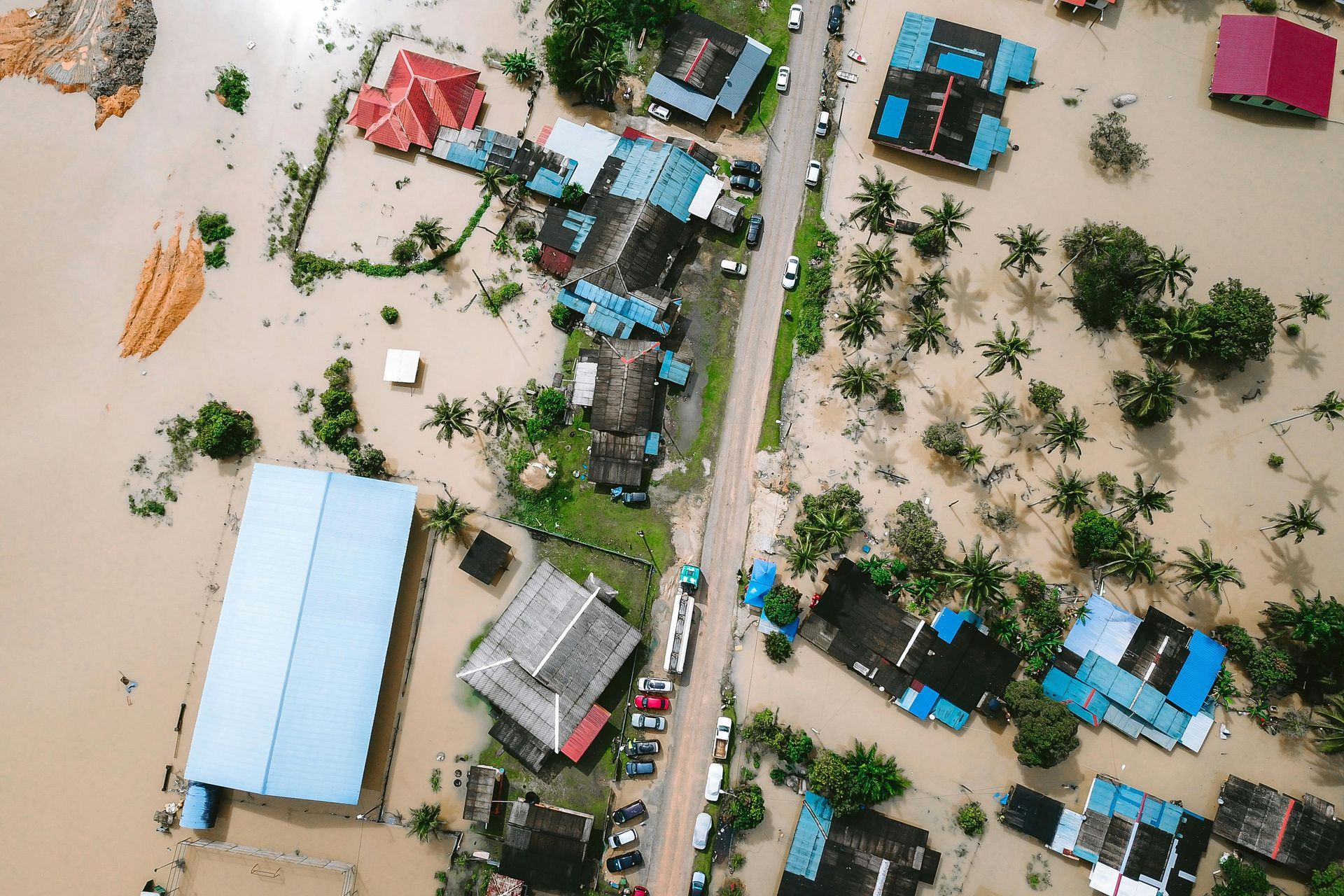
This is the Florida-specific case worth planning around directly. During and after a hurricane or major storm, it's common for power to go out, sometimes for days. No power generally means no air conditioning and no dehumidification running in the affected space, right at the moment water damage is most likely to occur. That combination, water intrusion plus high ambient heat and humidity plus no mechanical drying, is close to the fastest possible path to mold growth. If your home takes on water during a storm and the power is also out, treating the 48 hour window as your full runway is optimistic. The real clock may be closer to 24 hours or less.
What This Actually Means For You
A few practical implications follow directly from the above:
- Don't wait to see if it dries on its own, especially without power or air conditioning running. In Florida's ambient conditions, "it'll probably dry out" is a riskier assumption than it would be almost anywhere else.
- A household fan or a small consumer dehumidifier is rarely enough for a real water intrusion event. These tools help, but professional-grade extraction and drying equipment moves substantially more air and moisture than typical home equipment, which is the entire point when the clock is already working against you.
- Document as you go, not after. This matters for the same reason it matters after any water event: photos and a clear timeline support whatever insurance claim follows, and if there's a real difference between mitigation and restoration in your situation, that distinction affects how the claim gets handled.
- A fast professional response isn't overcaution here, it's matched to the actual conditions. Given everything above, treating Florida's timeline the same as a mild-climate state's timeline is where a lot of preventable mold problems start.
Fast Response for Florida's Faster Clock
Redline Restoration provides water damage mitigation and mold remediation throughout Fort Myers, and we factor Florida's climate into how urgently we respond, not just the standard 24 to 48 hour benchmark most guides quote. If you're dealing with water damage right now, especially during or after a storm,
get a free estimate or
call (239) 356-0178. In Florida, the clock is often shorter than you think.